Showing posts with label an. Show all posts

Saturday, March 21, 2015

An ELT Glossary Cognates and False Cognates


Cognates


  • Definition : A word that has a similar form and pronunciation, and the same meaning in English and the learner’s L1 and which is therefore easy for the learner to understand and remember.
  • Examples : the Italian word possibile is a cognate of the English possible; The german word Haus is a cognate of the English word house


False cognates

  • Definition : A word that has a similar form in English and the learner’s L1 but which is different in meaning and can therefore cause confusion to the learner. 
  • Example :  libraire means bookshop in French but looks like library in English; simpatico means nice, or pleasant in italian, but looks like sympathetic.


Read More..

Monday, March 16, 2015

An ELT Glossary Minimal pairs


Definition : Two words that differ only in one phoneme are called minimal pairs.

Examples :  bin-been, /bɪn bi:n/, taint-paint /teɪnt peɪnt/, bill-pill /bɪl pɪl/ are all minimal pairs.

Extra information : Minimal pairs can be used in the classroom to help students distinguish between and produce phonemes which they have difficulty with. See here for some teaching ideas : Developing Bottom-Up Decoding Skills for Listening


Read More..

An ELT Glossary Homonyms


Definition: two words which have the same written form and pronunciation but differ in meaning. 

Examples :   bear (animal)  /  bear (tolerate);   row (=move with oars)  /  row (= things in a line).

Related terms : homophones, homographs


Read More..

An ELT Glossary Denotation and Connotation


  • Denotation = the basic meaning of a word

  • Connotation = the evaluative meaning associated with the word

  • Example : slim and scrawny. Both of these mean thin - the denotation. However, slim has a positive connotation, whereas scrawny has a negative connotation


Read More..

The iPad is revealed as an excellent advertising platform

advertising platform

Who cares about the advertising we see today in different electronic devices? It might seem that do not have any benefit but as we know many applications and digital services are they covered by such advertising. I.e., a simple rule of three, to more advertisers more applications and developers on a given platform.

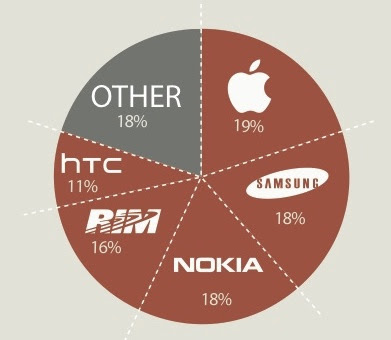
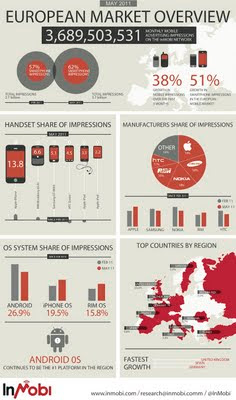
Why it is so important are published as good data of iOS as advertising ecosystem, in this case relating to the European level. As it shows the graphics included at the end of this entry and by InMobi Apple has become the first manufacturer by number of ads displayed on their mobile devices, 19 per cent of the total, a figure significantly higher to the of makes it a few months and will continue to grow soon.

Outstanding mention deserves the iPad, even without being a mobile phone properly such placed as the sixth model by number of displayed advertisements, a sum of 80 million of these advertising displayed on an iPad just during the month of May. Taking into account that the Apple Tablet not awaits else continue seeping in yet more households, this data will also increase in coming months. We also think that the Apple tablet is the perfect product for advertising, due to its larger screen size and its consumption quieter (in most cases in the comfort of the couch at home).

Finally, it seems to the Android platform set not is doing so well, and perhaps why they are more and more Android developers who drop out of the path of the freeware subsidized with publicity for the application fee. In this case the numbers speak for themselves, although Googles operating system is still the King of the continent, its percentage in this respect it has dropped 6 points versus the previous quarter.

Excellent data showing a more mature, more demanding European market who values stability conferred by owning an Apple product. The case of Spain, is for example, the second European country where more has grown this type of advertising content.

InMobi Apple
Read More..

An ELT Glossary The Critical Period Hypothesis


  • Definition : This hypothesis suggests that there is a period in childhood when language acquisition can take place effortlessly and naturally, but that after adolescence the brain is no longer able to process language in this way. 


  • Example : A child who goes to live in a foreign country will "pick up" a language just by being exposed to it, whereas an adult may need formal instruction

  •  The hypothesis is associated with the work of Lenneberg in the 1960s. It is criticised by researchers into second language Acquisition such as Krashen who contend that acquisition remains possible throughout life, and that difficulties encountered by adults come from other sources such as affective factors.


Read More..
 
Review Laptop - Powered By Blogger